How to make Apple Fritter Focaccia
Apple fritter focaccia combines the soft, airy crumb of focaccia with tender cinnamon apples and a simple vanilla glaze. The apple filling is folded into the dough before the final proof, creating pockets of fruit and warm spice throughout the bread without weighing down the surface.
This is a high-hydration dough, so it will feel softer and stickier than sandwich bread dough. That moisture is what creates the open crumb and tender texture. Instead of adding more flour, use lightly oiled hands and a series of folds to strengthen the dough.
Why This Apple Fritter Focaccia Works
This recipe builds flavor and structure in stages. Two rounds of stretching and folding organize the gluten without requiring traditional kneading. The first rise gives the dough time to expand, while the second proof allows it to relax into the pan after the apple filling is added.
The apples are cooked briefly before being folded into the dough. This removes some of their excess moisture and begins softening them so they finish baking at the same time as the bread.
The vanilla glaze adds the familiar sweetness of an apple fritter while allowing the cinnamon apples and tender focaccia crumb to remain the focus.
Equipment Needed
You will need:
- A large mixing bowl
- Measuring cups and spoons or a digital kitchen scale
- A flexible dough scraper or rubber spatula
- A medium saucepan
- A 9 × 13-inch baking pan
- Parchment paper
- A whisk
- A small bowl for the glaze
- A wire cooling rack
Apple Fritter Focaccia Ingredients
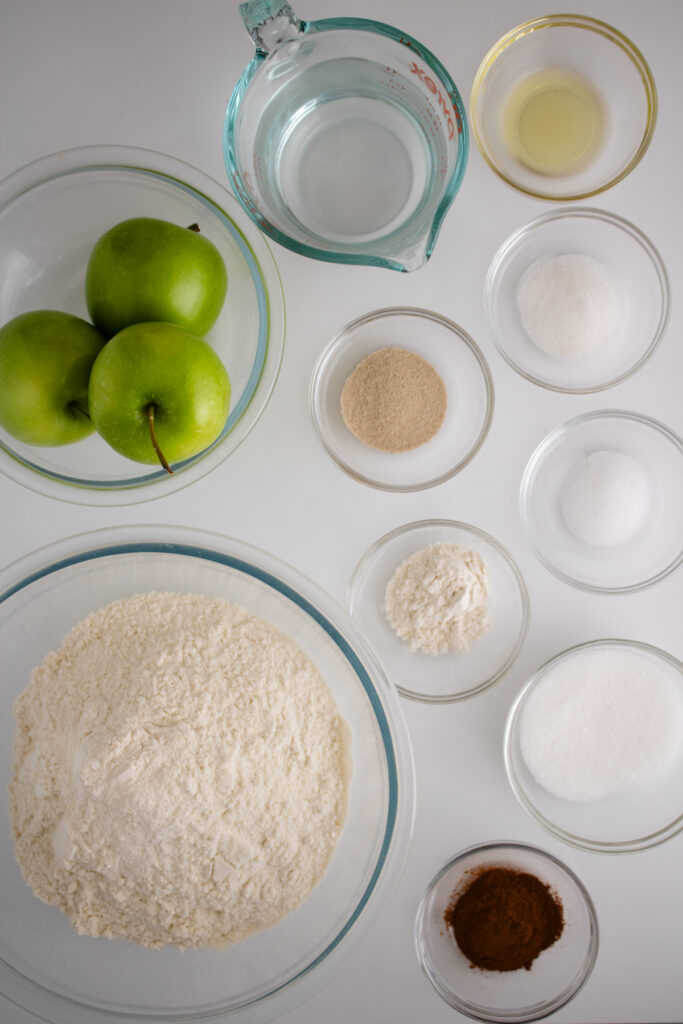
For the focaccia dough
- 4 cups or 500 grams bread flour
- 1¾ cups lukewarm water
- 2 teaspoons or 6 grams instant yeast
- 1 tablespoon neutral oil
- 1 teaspoon granulated sugar or honey
- 1½ teaspoons or 8 grams fine table salt
- Additional neutral oil for coating the pan and parchment
Bread flour provides enough protein to support this wet dough and its apple filling. The higher water content creates the moist, open crumb associated with focaccia.
For the cinnamon apple filling
- 2 medium or 3 small Granny Smith apples, peeled, cored, and chopped
- ⅓ cup granulated sugar
- 2 teaspoons lemon juice
- 1 teaspoon ground cinnamon
- 1 tablespoon all-purpose flour
- 2 to 3 tablespoons water
Granny Smith apples hold their shape well and provide enough acidity to balance the sweet glaze. The flour thickens the liquid released by the apples so the filling does not make the dough soggy.
For the vanilla glaze
- 1 cup powdered sugar
- ¼ teaspoon vanilla extract
- 2 tablespoons milk, plus more if needed
How to Make Apple Fritter Focaccia
1. Mix the dough
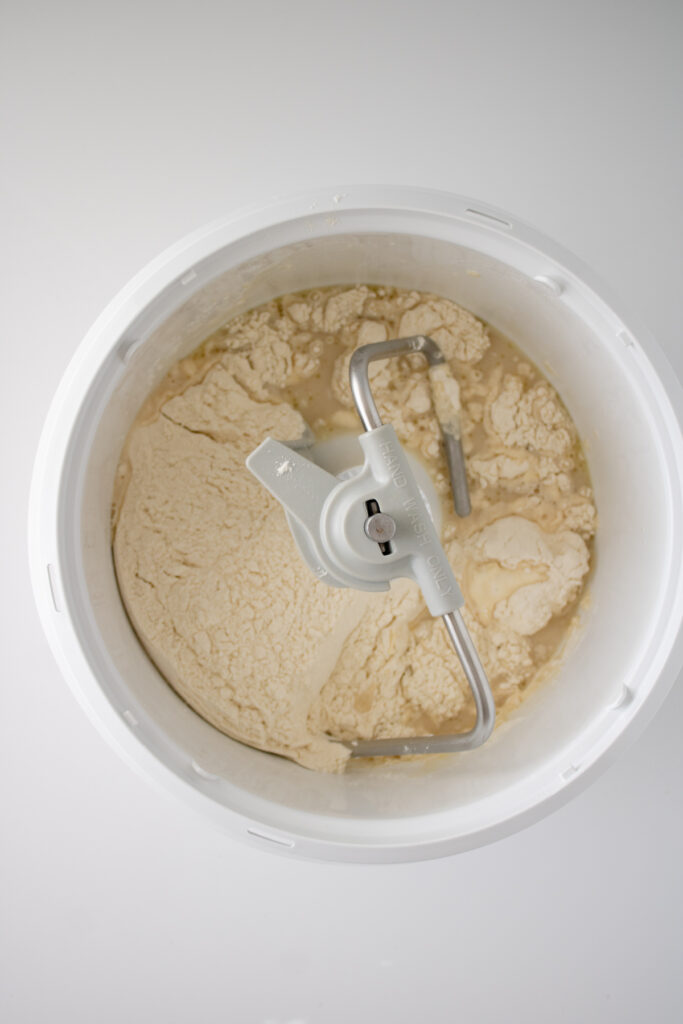
Combine the lukewarm water, instant yeast, neutral oil, sugar or honey, and salt in a large mixing bowl. Add the bread flour and mix until no dry pockets remain.
The dough will look rough and feel sticky. Do not add additional flour. Cover the bowl and allow the dough to rest for 15 minutes. This rest gives the flour time to absorb the water and makes the dough easier to strengthen.
2. Stretch and fold the dough
With damp or lightly oiled hands, lift one side of the dough, stretch it upward, and fold it toward the center. Rotate the bowl and repeat until all four sides have been folded.
Cover the bowl and rest the dough for another 15 minutes. Complete a second round of stretching and folding.
The dough should begin feeling smoother and more elastic after the second set of folds. Cover it and allow it to rise at room temperature for approximately 1 hour, or until noticeably expanded and airy.
3. Prepare the cinnamon apples
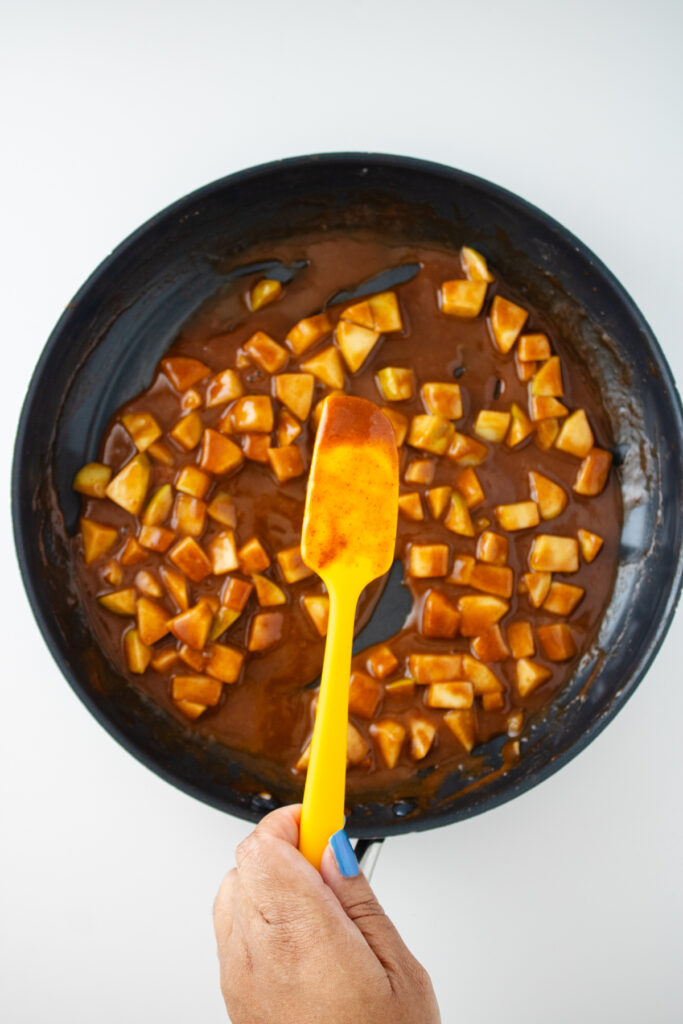
While the dough rises, combine the chopped apples, sugar, lemon juice, cinnamon, flour, and 2 tablespoons of water in a medium saucepan.
Cook over medium heat for 4 to 5 minutes, stirring frequently, until the apples begin to soften and the liquid thickens slightly. Add the remaining tablespoon of water only if the mixture becomes too dry.
Remove the filling from the heat and allow it to cool. Hot filling can weaken the dough and interfere with the final proof.
4. Prepare the pan
Line a 9 × 13-inch baking pan with parchment paper. Coat the parchment and exposed sides of the pan with additional neutral oil.
The oil prevents sticking, encourages browning, and helps create the crisp edges that contrast with the tender center.
5. Fill and fold the dough
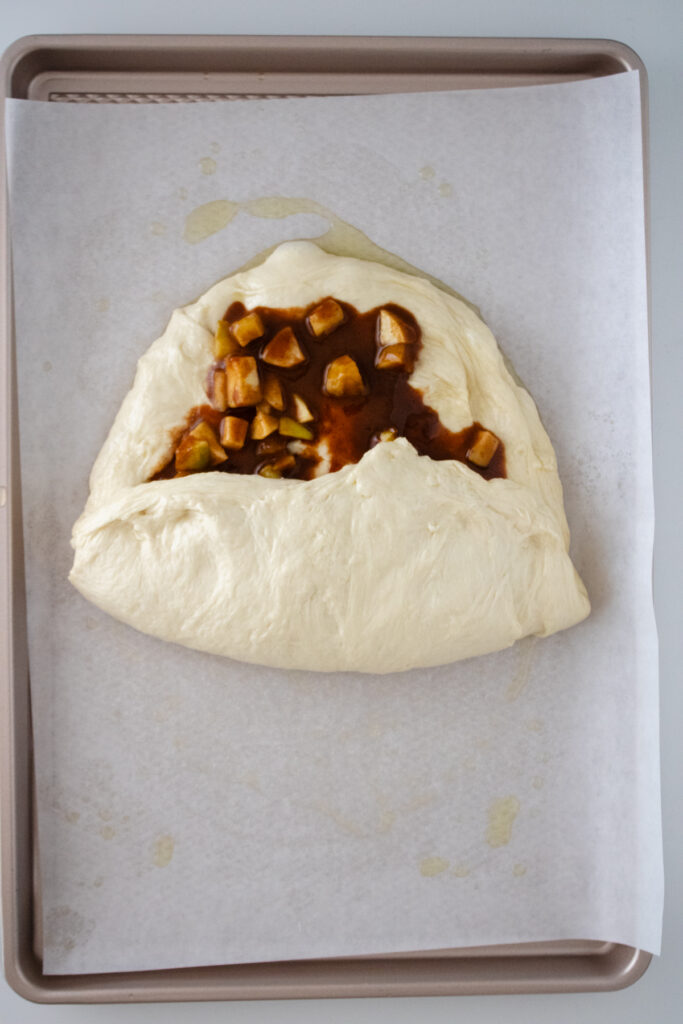
Transfer the risen dough to the prepared pan. With lightly oiled hands, gently stretch it into a rectangle.
Spread half of the cooled apple filling over the dough. Fold the top third of the dough toward the center, then fold the bottom third over it, similar to folding a letter.
Carefully turn the dough so the smooth side faces upward. Gently shape it to fit the pan without forcing out the trapped air.
6. Complete the final proof
Cover the pan loosely and allow the dough to proof at room temperature for approximately 1 hour.
The dough is ready when it looks puffy, has expanded toward the edges of the pan, and slowly springs back when gently pressed with an oiled fingertip. If it springs back immediately, give it more time.
7. Add the topping and dimple
Preheat the oven to 425°F using the conventional, nonconvection setting.
Spoon the remaining apple filling over the proofed dough. Coat your fingertips with oil and press firmly into the dough to create deep dimples. Press straight down without tearing or completely deflating the dough.
8. Bake
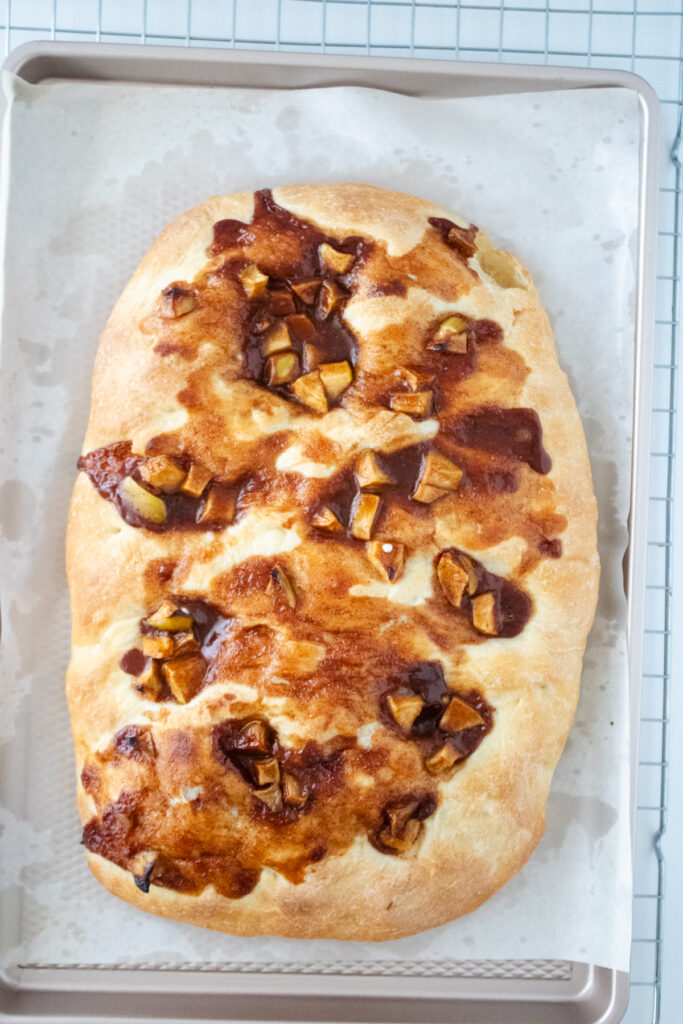
Bake for 23 to 28 minutes, until the focaccia is deeply golden around the edges and fully baked through the center.
If the top browns before the center is finished, loosely cover the pan with foil for the remaining baking time.
Allow the focaccia to cool in the pan for approximately 5 minutes before adding the glaze.
9. Make the vanilla glaze
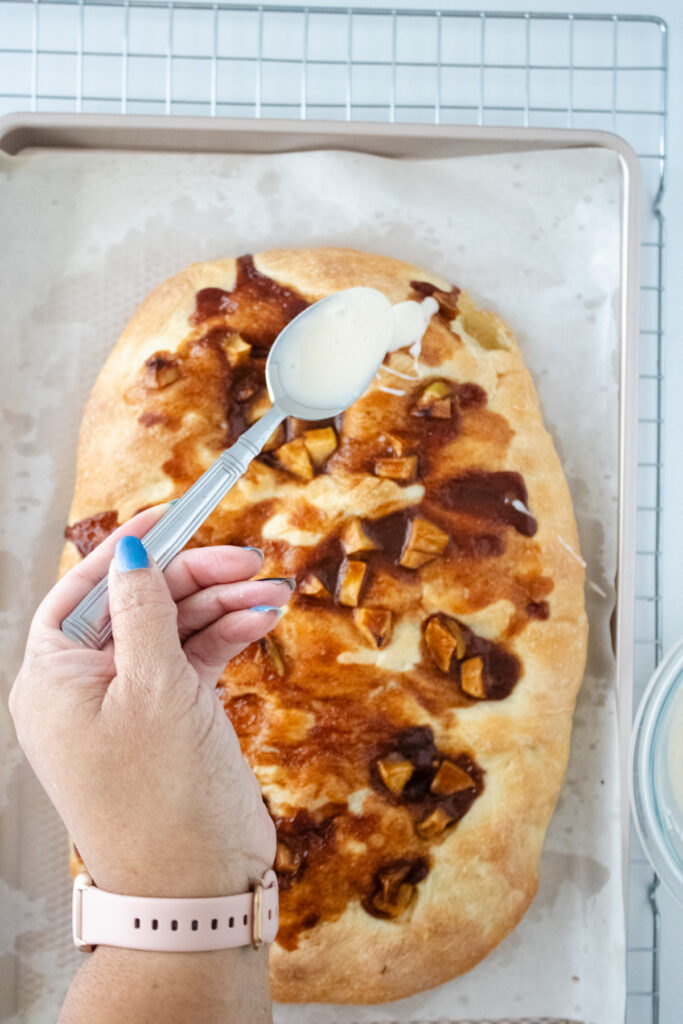
Whisk together the powdered sugar, vanilla extract, and milk until smooth.
The glaze should be thick enough to remain visible on the bread but fluid enough to drizzle. Add more milk ½ teaspoon at a time if it is too thick.
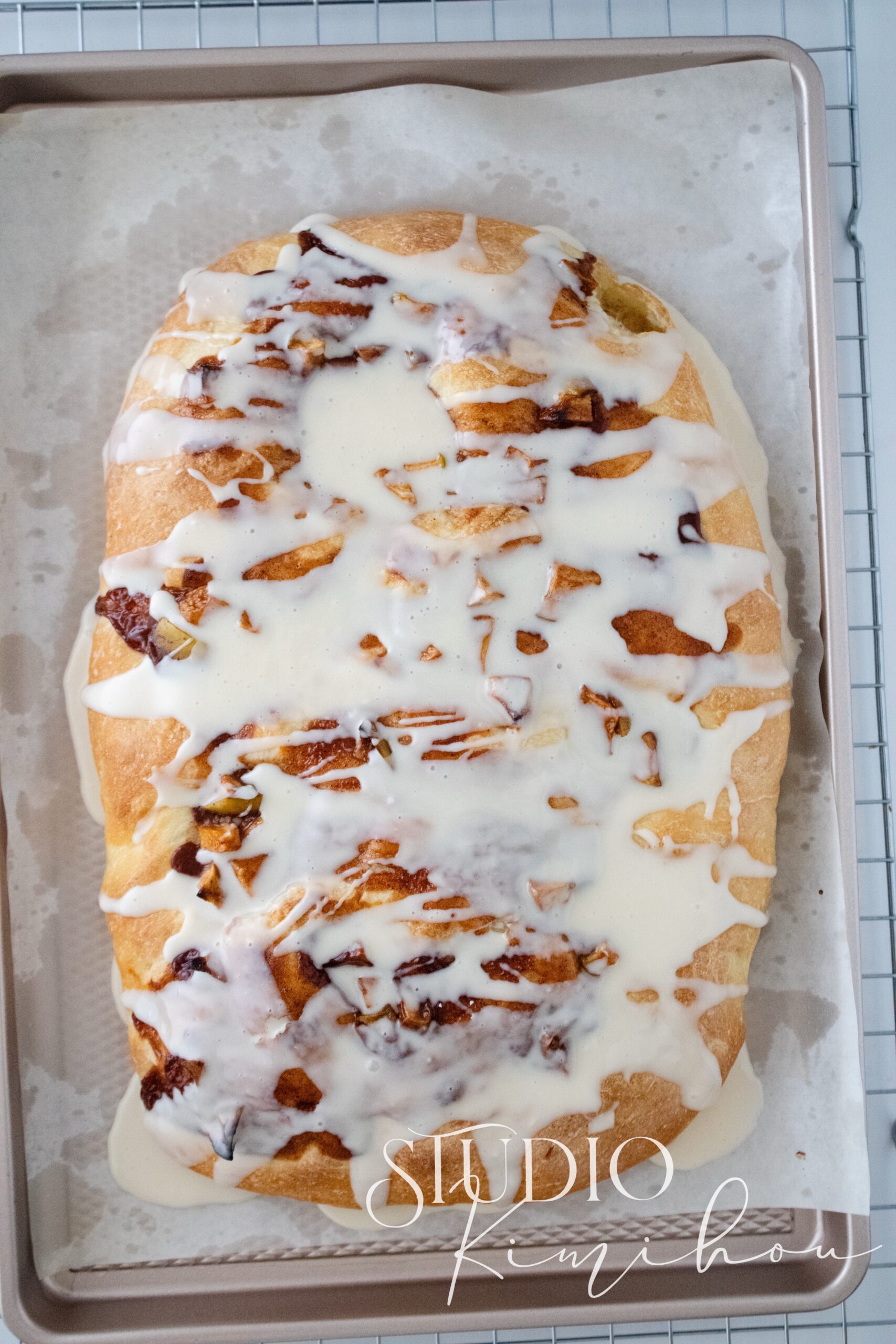
Drizzle the glaze over the warm focaccia. Allow the bread to cool and the glaze to set before cutting it into 20 pieces.
How to Tell When Focaccia Dough Has Risen Enough
Use the appearance and texture of the dough instead of relying only on the clock. Room temperature affects how quickly yeast works, so the dough may need more or less time than stated.
Properly proofed focaccia should look puffy and contain visible air beneath the surface. When gently pressed, the indentation should return slowly. Dough that springs back immediately needs more time. Dough that collapses or does not spring back may be overproofed.
Tips for Better Apple Fritter Focaccia
Do not correct sticky dough with more flour
This recipe is designed to produce a wet dough. Adding enough flour to make it feel like conventional bread dough will create a denser, drier focaccia. Use lightly oiled hands to manage stickiness.
Cool the apple filling before using it
Warm filling can soften the dough’s structure and slow the yeast. Let the apples cool while the dough completes its first rise.
Avoid overcooking the apples
The apples should begin softening on the stove but should not become applesauce. They will continue cooking in the oven.
Dimple firmly but carefully
Deep dimples help distribute the topping and give focaccia its characteristic texture. Press down with your fingertips without dragging them through the dough.
Let the glaze set before cutting
Glazing the focaccia while it is slightly warm helps the glaze settle onto the surface. Cutting immediately can cause the glaze to run and the warm crumb to compress.
Troubleshooting Apple Fritter Focaccia
Why is my dough extremely sticky?
Focaccia dough contains more water than many bread doughs, so stickiness is expected. Allow the dough to complete its resting periods and folds before judging its texture. Use oiled hands instead of adding flour.
Why is my focaccia dense?
Dense focaccia is usually caused by insufficient proofing, too much added flour, or pressing too much air out of the dough while shaping it. Let the dough become visibly puffy during both rises and handle it gently after the first rise.
Why is the center gummy?
A gummy center can result from underbaking, slicing while the bread is too warm, or using apple filling that contains too much liquid. Cook the filling until its juices have thickened and bake until the center is set.
Can I use a different type of apple?
Yes. Choose a firm baking apple that will hold its shape, such as Honeycrisp, Pink Lady, or Braeburn. Sweeter apples will produce a less tart filling than Granny Smith apples.
Can I prepare the dough ahead of time?
Yes. After mixing and folding the dough, cover it and refrigerate it overnight. Allow it to return to room temperature and become visibly active before adding the apple filling and completing the final proof.
Storage and Reheating
Store leftover apple fritter focaccia in an airtight container at room temperature for up to two days. Because the glaze contains milk, refrigerate it if your kitchen is especially warm.
For longer storage, refrigerate the focaccia for up to four days. Allow it to return to room temperature before serving, or warm an individual piece briefly in the microwave.
Unglazed focaccia can be frozen for up to one month. Wrap individual pieces securely and place them in a freezer-safe container. Thaw at room temperature, warm gently, and add fresh glaze before serving.
Apple Fritter Focaccia
Ingredients
Equipment
Method
- Combine the lukewarm water, instant yeast, neutral oil, sugar or honey, and salt in a large mixing bowl. Add the bread flour and mix until no dry pockets remain.
- The dough will look rough and feel sticky. Do not add additional flour. Cover the bowl and allow the dough to rest for 15 minutes. This rest gives the flour time to absorb the water and makes the dough easier to strengthen.
- With damp or lightly oiled hands, lift one side of the dough, stretch it upward, and fold it toward the center. Rotate the bowl and repeat until all four sides have been folded.
- Cover the bowl and rest the dough for another 15 minutes. Complete a second round of stretching and folding.
- The dough should begin feeling smoother and more elastic after the second set of folds. Cover it and allow it to rise at room temperature for approximately 1 hour, or until noticeably expanded and airy.
- While the dough rises, combine the chopped apples, sugar, lemon juice, cinnamon, flour, and 2 tablespoons of water in a medium saucepan.
- Cook over medium heat for 4 to 5 minutes, stirring frequently, until the apples begin to soften and the liquid thickens slightly. Add the remaining tablespoon of water only if the mixture becomes too dry.
- Remove the filling from the heat and allow it to cool. Hot filling can weaken the dough and interfere with the final proof.
- Line a 9 × 13-inch baking pan with parchment paper. Coat the parchment and exposed sides of the pan with additional neutral oil.
- The oil prevents sticking, encourages browning, and helps create the crisp edges that contrast with the tender center.
- Transfer the risen dough to the prepared pan. With lightly oiled hands, gently stretch it into a rectangle.
- Spread half of the cooled apple filling over the dough. Fold the top third of the dough toward the center, then fold the bottom third over it, similar to folding a letter.
- Carefully turn the dough so the smooth side faces upward. Gently shape it to fit the pan without forcing out the trapped air.
- Cover the pan loosely and allow the dough to proof at room temperature for approximately 1 hour.
- The dough is ready when it looks puffy, has expanded toward the edges of the pan, and slowly springs back when gently pressed with an oiled fingertip. If it springs back immediately, give it more time.
- Preheat the oven to 425°F using the conventional, nonconvection setting.
- Spoon the remaining apple filling over the proofed dough. Coat your fingertips with oil and press firmly into the dough to create deep dimples. Press straight down without tearing or completely deflating the dough.
- Bake for 23 to 28 minutes, until the focaccia is deeply golden around the edges and fully baked through the center.
- If the top browns before the center is finished, loosely cover the pan with foil for the remaining baking time.
- Allow the focaccia to cool in the pan for approximately 5 minutes before adding the glaze.
- Whisk together the powdered sugar, vanilla extract, and milk until smooth.
- The glaze should be thick enough to remain visible on the bread but fluid enough to drizzle. Add more milk ½ teaspoon at a time if it is too thick.
- Drizzle the glaze over the warm focaccia. Allow the bread to cool and the glaze to set before cutting it into 20 pieces.