How to make Orange Cranberry Walnut Sourdough Bread
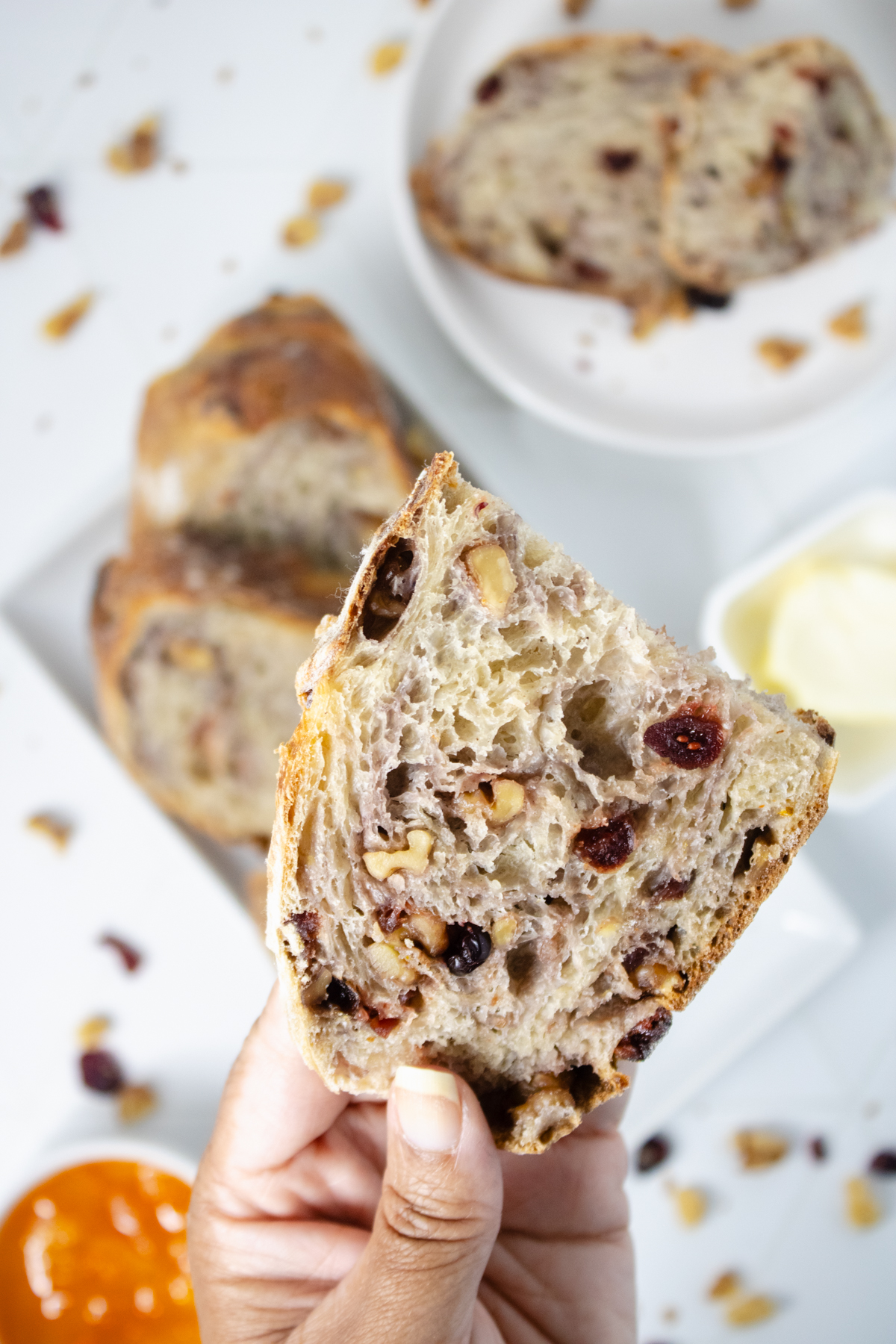
Orange cranberry walnut sourdough bread combines a crisp artisan crust with a tender, chewy crumb filled with bright citrus, tart cranberries, and walnuts. The orange juice and zest bring freshness to the loaf, while honey or maple syrup adds sweetness and encourages deeper browning.
This is a high-moisture dough with several inclusions, so it will feel stickier than a basic sourdough loaf. The goal is not to eliminate that stickiness with additional flour. Instead, the resting periods and repeated stretch and folds allow the flour to absorb the liquid and the gluten structure to strengthen gradually.
Affiliate Disclosure: This post contains affiliate links. If you purchase through one of these links, Teach Me How to Bake TM may earn a commission at no additional cost to you.

Why This Sourdough Bread Works
The combination of bread flour and all-purpose flour gives the loaf enough strength to support the cranberries and walnuts without producing an excessively tough crumb. Bread flour provides structure, while all-purpose flour keeps the finished bread more tender.
Orange juice and zest provide two different kinds of citrus flavor. The juice adds acidity and moisture throughout the dough, while the zest carries concentrated orange oils that remain noticeable after baking. Honey or maple syrup balances the tart cranberries and helps the crust develop a deep golden color.
Soaking the dried cranberries prevents them from pulling too much moisture from the dough. The cranberries must be drained and dried thoroughly before they are folded into the bread. Excess soaking liquid can make the dough slippery and interfere with gluten development.
Equipment Needed
• Kitchen scale
• Dutch oven
• Mixing bowl
• Danish Dough Whisk
• Bench scraper
• Dough scraper
• Bread lame or razor blade
• Oven mitts
• Cooling rack
• Bread knife
What the Dough Should Look and Feel Like
After the initial mixing, the dough should look shaggy and feel sticky. It may not hold a clean shape yet, but there should not be any pockets of dry flour.
As you complete the stretch-and-fold sets, the dough should become smoother and more elastic. It should begin pulling away from the bowl in one connected mass instead of spreading immediately.
At the end of bulk fermentation, look for a dough that is puffy, slightly domed, and nearly doubled in size. Small bubbles may be visible across the surface or against the sides of the bowl. Use those physical signs instead of relying only on the clock because room temperature and starter strength affect fermentation speed.
After the final proof, the shaped loaf should feel aerated and slightly springy. When you press it gently with a floured fingertip, the indentation should return slowly. If it springs back immediately, it needs more time. If the indentation remains and the dough begins to collapse, it has proofed too long.

How to Add Cranberries and Walnuts Without Tearing the Dough
Drain the soaked cranberries and walnuts thoroughly and pat them dry. Add the inclusions in three smaller additions instead of placing everything on the dough at once.
Sprinkle one-third of the cranberries and walnuts over the dough, fold the dough over itself, and repeat with the remaining additions. Distributing them gradually helps keep the inclusions inside the loaf and reduces tearing.
If the dough begins to resist or tear, cover it and allow it to rest for 10 minutes before continuing. Resting gives the gluten time to relax.
Troubleshooting Orange Cranberry Walnut Sourdough Bread
Why is my dough so sticky?
This is a high-moisture dough containing orange juice and a liquid sweetener, so some stickiness is expected. Use wet hands and a bench scraper instead of adding large amounts of flour. The dough should become stronger and easier to handle after several stretch-and-fold sets.
Why is my dough rising slowly?
A weak starter, a cool kitchen, or the added sweetener can slow fermentation. Make sure the starter is bubbly and near its peak before mixing the dough. Allow the dough more time if it has not developed visible bubbles or increased substantially in volume.
Why are the cranberries and walnuts falling out?
The inclusions may have been added too quickly or left too wet after soaking. Add them gradually, pat them dry, and use the folds to move loose pieces toward the center of the dough.
Why is my loaf dense?
Dense bread is commonly caused by an inactive starter, insufficient bulk fermentation, or pressing too much gas from the dough during shaping. Judge fermentation by the dough’s volume, bubbles, and texture rather than time alone.
Why are the exposed cranberries burning?
Tuck loose cranberries into the dough during shaping. If the crust or exposed fruit begins darkening too quickly after the Dutch oven lid is removed, loosely cover the loaf with foil for the final portion of baking.
Why is the center gummy?
The loaf may be underbaked or sliced before it finished cooling. Bake until the center reaches at least 200°F, then allow the bread to cool completely before cutting it.
Frequently Asked Questions
Can I use all bread flour?
Yes. Using all bread flour will create a stronger, chewier crumb. The dough may also feel slightly firmer.
Can I leave out the walnuts?
Yes. The walnuts can be omitted without replacing them. You can also substitute pecans if desired.
Can I use fresh cranberries?
This formula was developed with dried cranberries. Fresh or frozen cranberries contain considerably more moisture and should not be substituted in the same quantity without retesting the dough.
How should I store the bread?
Store the completely cooled loaf in a bread bag or airtight container at room temperature for up to three days. For longer storage, slice the loaf and freeze it in an airtight freezer bag for up to two months. Toast or thaw individual slices as needed.
Want to explore more sourdough recipes, tips, and techniques?
- Unleash the Magic of Homemade Sourdough: A Step-by-Step Guide
- How to Feed and Maintain a Sourdough Starter
- Sourdough Discard Apple Cinnamon Oatmeal Muffins
Orange Cranberry Walnut Sourdough Bread
Ingredients
Equipment
Method
- Add the warm water, orange juice, sourdough starter, honey or maple syrup, and orange zest to a large mixing bowl. Stir until the starter is mostly dispersed.
- Add the bread flour, all-purpose flour, cinnamon, and sea salt. Mix until no dry flour remains. The dough will look shaggy and feel sticky. Cover the bowl with a damp towel and let the dough rest for 45 minutes.
- While the dough rests, place the dried cranberries in a small bowl and cover them with orange juice, apple juice, or water. If you prefer softer walnuts, soak them separately in warm water. Let the cranberries and walnuts soak for 30 minutes, then drain and pat them thoroughly dry.
- Add the cranberries and walnuts to the dough in three additions. After each addition, fold the dough over itself several times to enclose the inclusions. Continue until the cranberries and walnuts are evenly distributed. Cover and rest for 30 minutes.
- With wet hands, lift one side of the dough, stretch it gently, and fold it toward the center. Turn the bowl and repeat on all four sides. This completes one set of stretch and folds.
- Repeat the stretch-and-fold process every 30 minutes for three to four additional sets. The dough should gradually become smoother, stronger, and better able to hold its shape.
- Cover the bowl and let the dough bulk ferment at room temperature for 6 to 8 hours. The dough is ready when it has nearly doubled, looks puffy and slightly domed, and shows visible bubbles along the surface or sides of the bowl.
- Lightly flour a clean work surface. Turn out the dough gently without pressing out all the gas. Form it into a loose round or oblong and let it rest for 5 minutes.
- Tighten the loaf by gently dragging it across the work surface. Place it seam side up in a floured banneton or a bowl lined with a well-floured towel. Cover and proof at room temperature for 2 to 4 hours. The dough should look puffy, and an indentation made with a lightly floured finger should spring back slowly.
- Place the Dutch oven inside the oven and preheat to 450°F for at least 30 minutes.
- Turn the loaf onto parchment paper with the smooth side facing up. Score the top with a bread lame or sharp knife. Use the parchment to lower the loaf carefully into the hot Dutch oven.
- Cover and bake for 30 minutes. Remove the lid and continue baking for 20 to 25 minutes, until the crust is deeply golden and the center reaches at least 200°F.
- Use the parchment paper to lift the bread from the Dutch oven. Transfer it to a cooling rack and let it cool completely before slicing.